


There is something profoundly unsettling about a courtroom where the truth is already irrelevant. Not because the facts are missing, not because justice is impossible, but because everyone involved has already decided which version of reality deserves to survive that is the terrifying question beating beneath “The Figure in the Fog”.
On the surface, Manini Brar’s debut is an intelligent legal thriller built around an irresistible premise, how does a lawyer defend a young tribal boy who has confessed to murdering a djinn, a supernatural being that cannot possibly exist? Yet the book refuses to remain confined within the comfortable boundaries of courtroom fiction. What begins as a bizarre criminal case gradually transforms into something far richer, an examination of fear, power, prejudice, memory and the frightening ease with which institutions manufacture convenient truths. The result is one of the most compelling works of Indian legal fiction in recent years, not because it reinvents the genre, but because it reminds us how much untapped storytelling potential the Indian legal system has always possessed.

At the heart of the book stands Malti Jakhar, a Delhi litigator standing at the crossroads of professional exhaustion. Ten years of courtroom battles have left her questioning whether the profession she once loved is worth fighting for anymore. She is not introduced as an idealistic crusader nor as an impossibly brilliant legal genius. Instead, she feels refreshingly ordinary in the best possible sense, ambitious, sarcastic, insecure, competent and emotionally weathered by a profession that rewards endurance more often than brilliance. It is this emotional realism that makes Malti immediately believable. She carries neither cinematic heroism nor exaggerated vulnerability. Instead, she possesses something rarer in contemporary fiction that is credibility.
Her relationship with her clerk, Chanderpal, quickly becomes the emotional backbone of the book. Their exchanges are effortlessly witty, affectionate without sentimentality, and full of lived-in familiarity. She understands that partnerships built over years rarely need grand declarations. Instead, they exist in shared jokes, mutual irritation, professional shorthand and quiet loyalty. Every conversation between them feels earned. The chemistry between these two characters injects warmth into what could otherwise have become an overwhelmingly grim narrative.
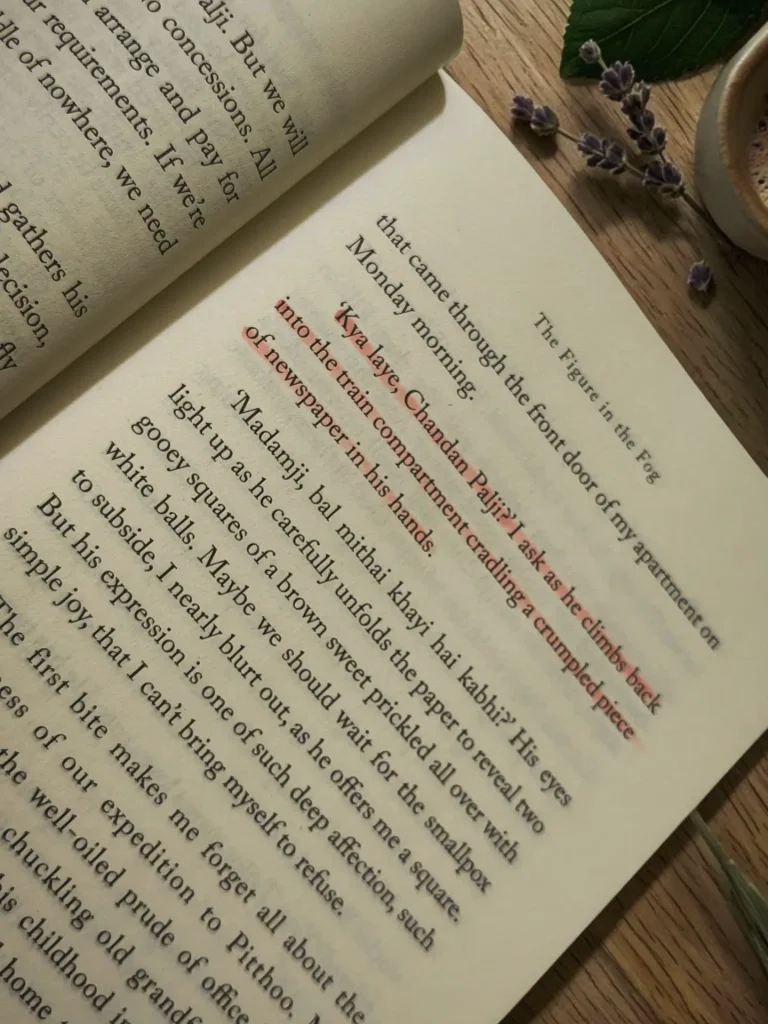
The book’s greatest achievement, however, lies beyond its characters. It lies in how brilliantly it dismantles the illusion that courts operate solely on evidence. As Malti ventures from Delhi into remote forests, investigating a murder wrapped in superstition and political manipulation, the book slowly reveals that facts alone rarely determine justice, stories do, narratives do and social hierarchies do.
The alleged djinn gradually becomes more than a supernatural mystery, It becomes a metaphor.A metaphor for every imagined enemy society has ever created. Every “other” constructed through fear. Every invisible monster manufactured by politics to justify violence. Every convenient myth powerful enough to erase human beings behind it. The author never announces these ideas loudly. She trusts readers enough to arrive at them independently that restraint gives the novel remarkable power.
Many contemporary books attempting social commentary often pause their stories in order to deliver opinions. The book wisely avoids that trap. Its observations emerge naturally through investigation, testimony, courtroom strategy and human behaviour rather than ideological speeches. The politics never overwhelms the narrative because it grows organically from the lives of people trapped within it.Perhaps this is where the author’s years as a practising lawyer become most visible.
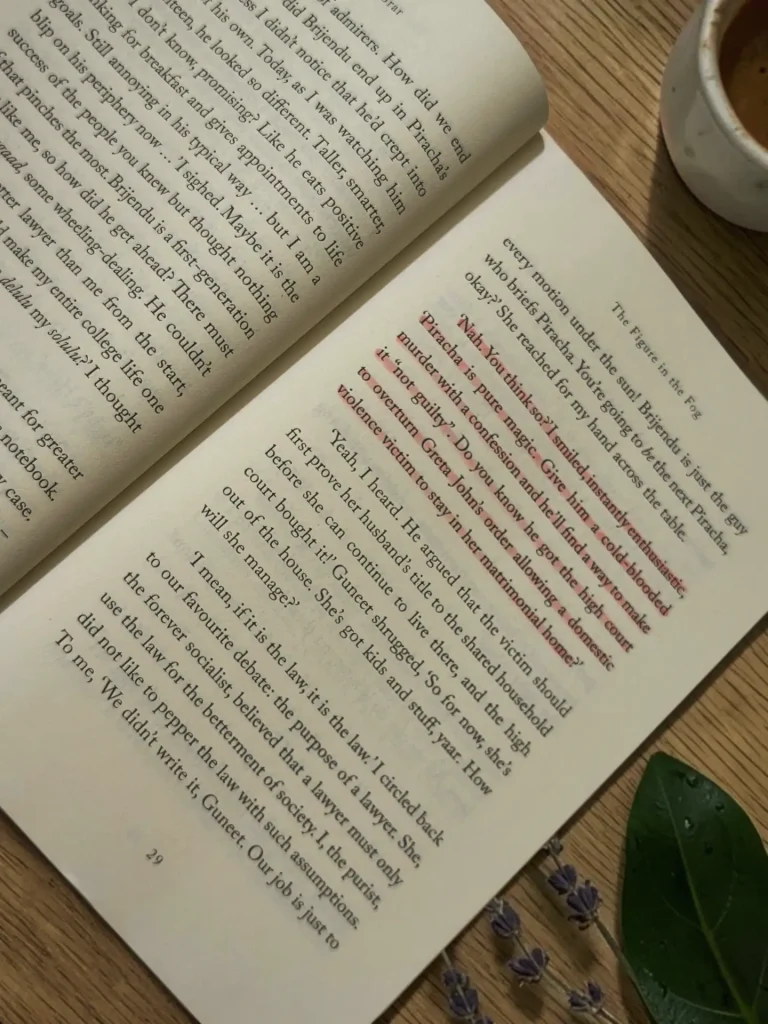
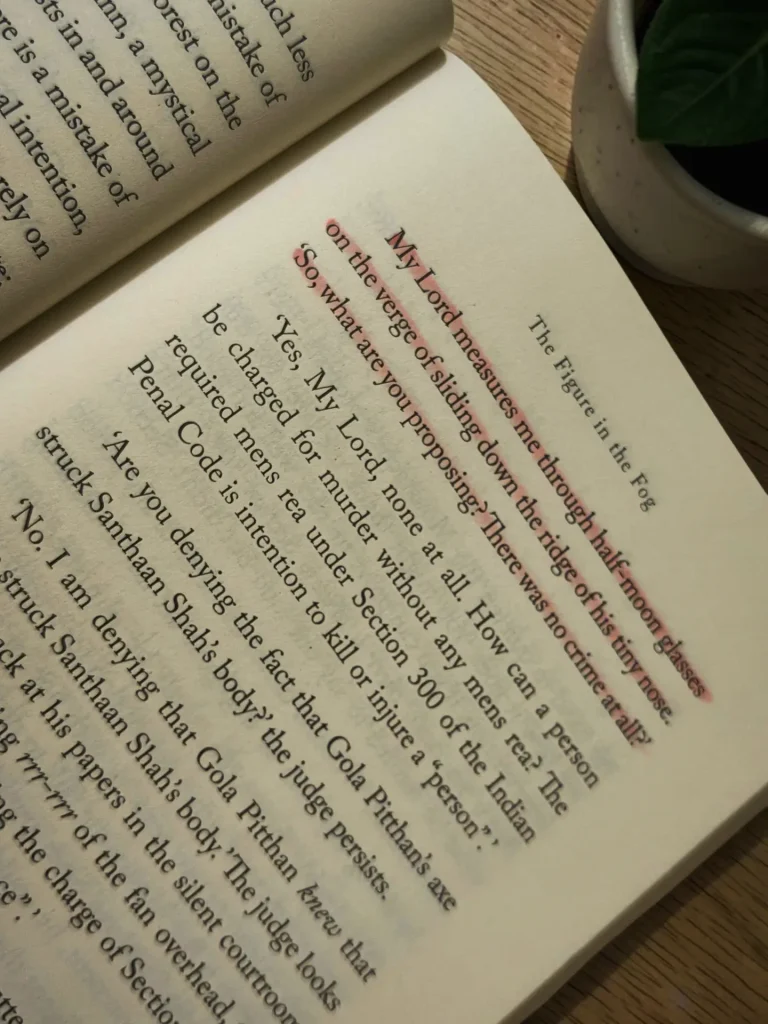
The legal proceedings possess an authenticity that is increasingly rare in popular fiction. Courtrooms here are not theatrical arenas where lawyers deliver endless dramatic monologues while judges watch silently. Instead, they are bureaucratic, procedural, frustrating and occasionally absurd, small technicalities matter, paperwork matters, and strategy matters. The law feels like a living profession rather than cinematic spectacle.
Yet the legal accuracy never comes at the expense of readability. Readers without any legal background can comfortably follow the proceedings, while those familiar with litigation will likely appreciate the understated precision with which Brar captures everyday courtroom culture.
The conversations throughout the book sparkle with humour, regional flavour and authenticity. The use of dialect never feels ornamental or performative; instead, it deepens character and anchors each interaction within a recognisable social world. People sound like themselves rather than like vessels carrying thematic arguments that authenticity extends beyond dialogue into the author’s prose itself.
Her writing is deceptively simple. She rarely reaches for elaborate literary flourishes, yet certain observations linger long after the page has been turned. Her descriptions of fear, hatred and collective paranoia possess unusual emotional clarity. Particularly memorable is her personification of hatred and fear as a Frankenstein-like creation, an image that perfectly encapsulates the book’s central argument about monsters that societies willingly create before pretending to fear them.
The pacing deserves equal praise. At roughly 250 pages, the book never overstays its welcome. Each revelation arrives with careful timing, allowing curiosity rather than artificial suspense to propel the reader forward. It is genuinely difficult to stop reading once the investigation begins because every answer raises larger moral questions than the mystery itself.
✍️ Strengths :
🔸An original legal thriller that successfully blends mystery, politics and social commentary.
🔸Exceptionally authentic courtroom writing informed by real legal experience.
🔸A deeply believable protagonist whose emotional journey feels grounded and relatable.
🔸Outstanding dialogue enriched by regional dialect and understated humour.
🔸Strong exploration of prejudice, fear, justice and institutional power without becoming preachy.
🔸Tight pacing that makes the novel genuinely difficult to put down.
🔸A mature, emotionally honest ending that resists simplistic notions of justice.
✒️ Areas for Improvement :
▪️Some supporting characters could have been developed with greater psychological depth.
▪️Readers expecting a courtroom-heavy thriller may find the investigative sections more dominant than anticipated.
▪️The symbolic dimensions of the djinn metaphor occasionally feel so intriguing that one wishes the novel had explored them even further.
In conclusion, it is more than an accomplished debut, it is evidence that Indian legal fiction can be intellectually rigorous, emotionally affecting and irresistibly readable at the same time. The author writes with the authority of someone who understands the law intimately, but more importantly, with the empathy of someone who understands the people trapped within it. She transforms an unusual courtroom case into a meditation on justice, identity, prejudice and the stories societies invent to protect themselves from uncomfortable truths.It is rare to encounter a book that entertains with the momentum of a thriller while quietly asking readers to reconsider how power shapes truth itself. This book manages exactly that. It is gripping without sensationalism, politically aware without becoming ideological, emotionally moving without resorting to sentimentality, and philosophically rich without sacrificing narrative pace.By the time the final page is turned, the mystery may be solved, but the larger questions remain unresolved, and perhaps that is precisely the author’s point. Some figures disappear when the fog lifts. Others were never standing in the mist at all. They existed only because we chose to believe they did.