

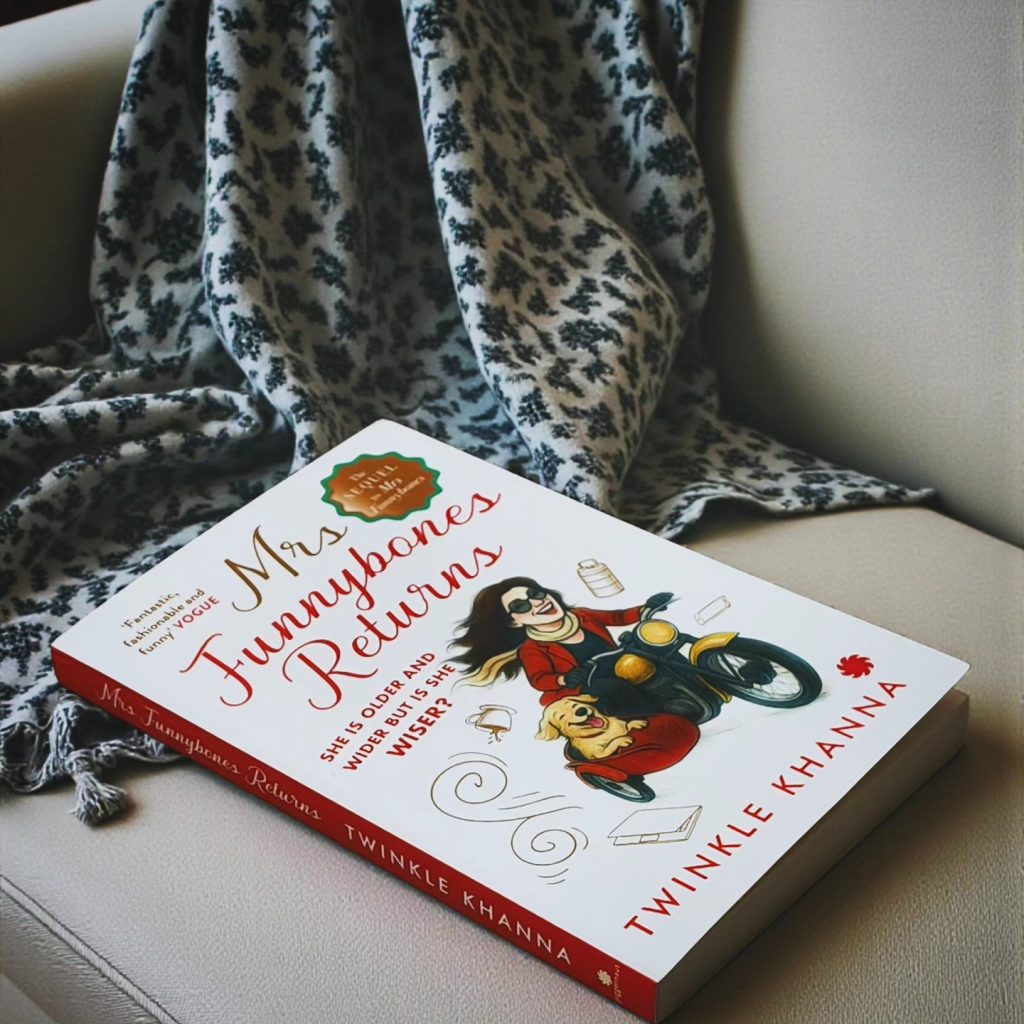
There are books that entertain, books that provoke, and then there are books that quietly hold up a mirror while making you laugh at your own reflection. “Mrs Funnybones Returns” belongs firmly in the third category. On the surface, it presents itself as light, breezy humour, the kind you pick up between meetings or during a commute. Beneath that surface, however, lies a sharply observant, socially aware commentary on contemporary Indian life, particularly urban womanhood, marriage, ageing, and the unspoken negotiations that shape everyday existence.
Written by Twinkle Khanna, the book does not attempt to dazzle with literary flourishes or intellectual posturing. Instead, it relies on something far more difficult to master like clarity, timing, and emotional intelligence. Her humour works not because it is loud, but because it is accurate.
One of the most significant thematic strengths of the book is its use of humour as an entry point rather than an endpoint. The laughter comes easily, one-liners about marriage, in-laws, parenting, and bodily changes are sharp and memorable, but what lingers is the observation underneath.
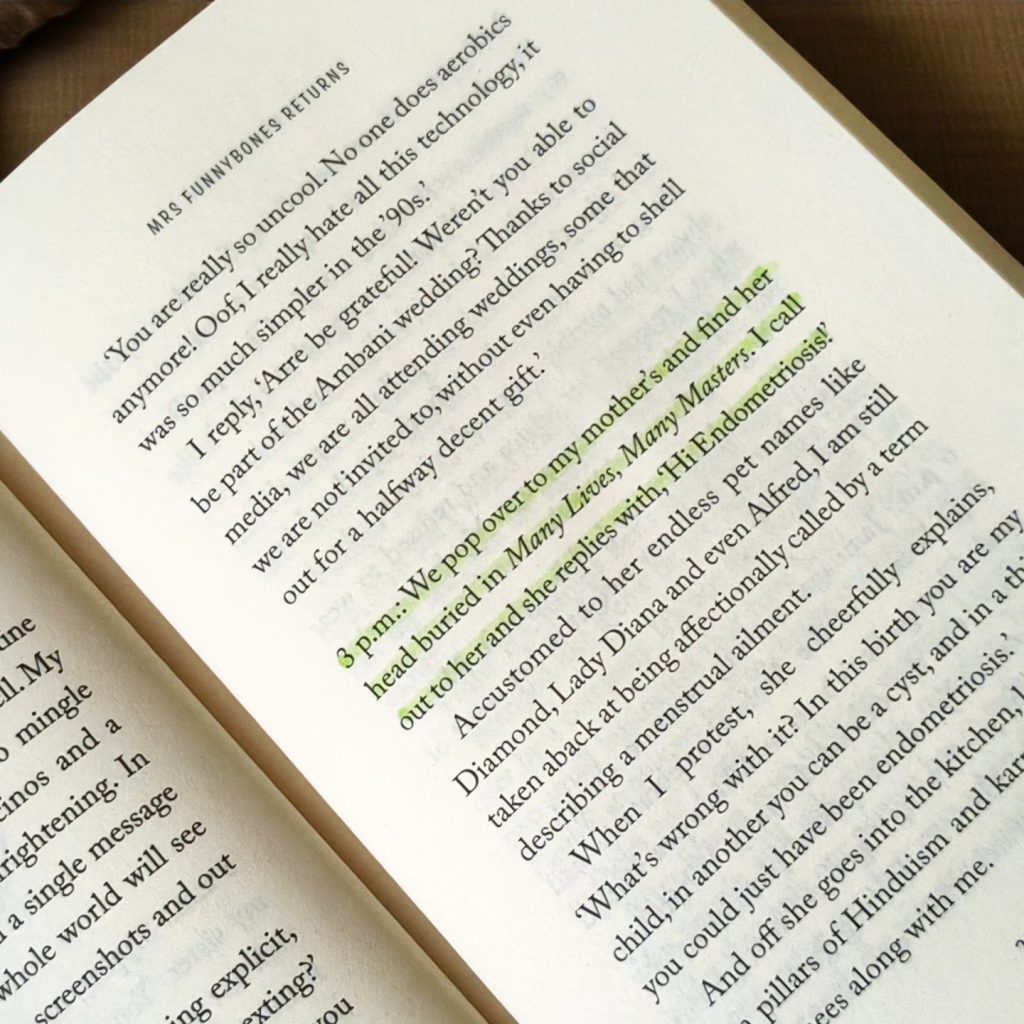
She writes about menopause, domestic fatigue, gender expectations, and middle-aged invisibility with a disarming casualness. She does not dramatise these experiences, nor does she trivialise them. Instead, she normalises them by making them laughable, not in mockery, but in recognition. This is where the book quietly succeeds as feminist writing without ever announcing itself as such.
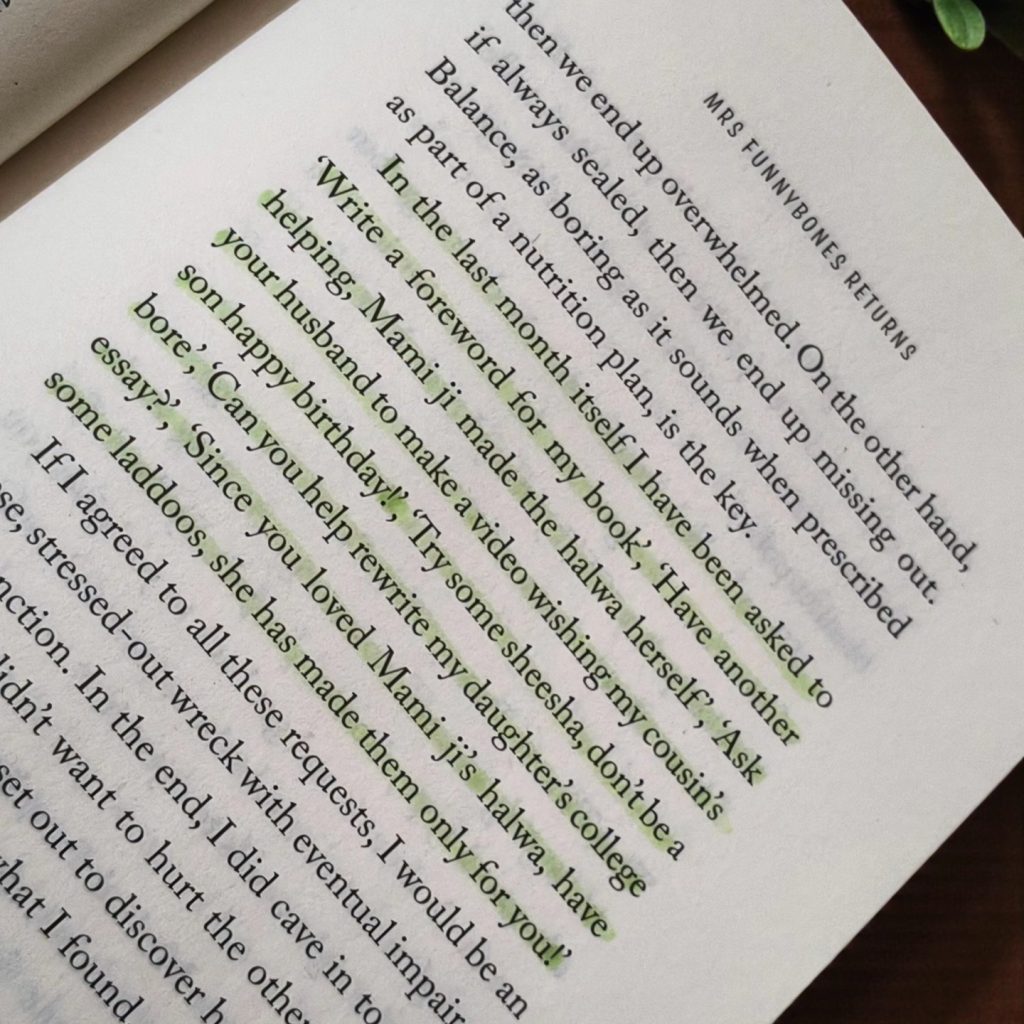
Her recurring references to domestic roles, particularly the casual way she refers to her husband as “the man of the house,” are deceptively simple. The phrase is never weaponised; it is dropped lightly, almost carelessly, and yet it exposes decades of conditioning around power, labour, and expectation. The absence of overt commentary is precisely what gives these moments their bite.
Another notable thematic layer is the seamless blending of personal anecdote with national mood. Reflections on traffic, public behaviour, social media outrage, and political absurdities are woven into essays that otherwise revolve around family life. This fusion reflects lived reality, the way the state intrudes into the domestic, and the domestic mirrors the state.
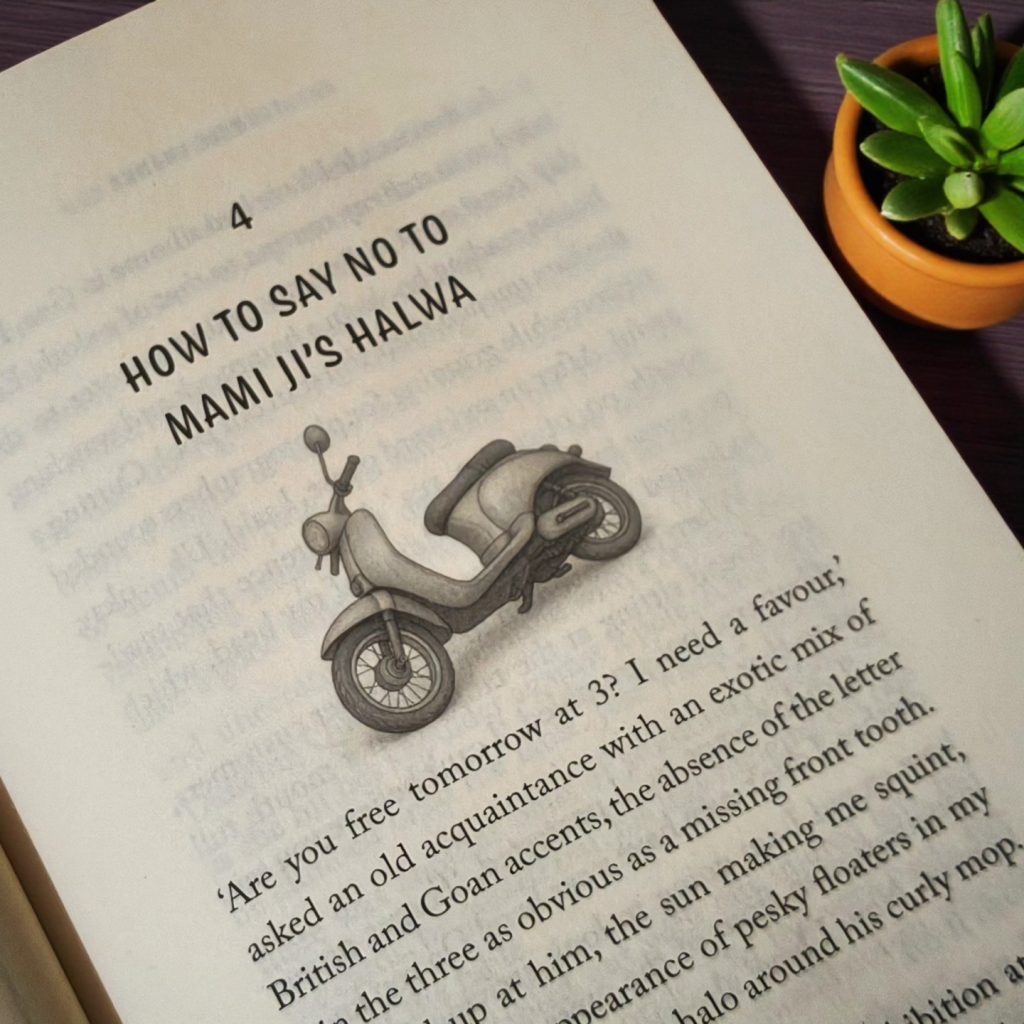
Her language is conversational, almost deceptively simple. There are no ornamental metaphors, no indulgent prose. Yet the rhythm is precise, the punchlines controlled, and the emotional beats well-calibrated. This kind of writing often gets mistaken for “easy reading,” when in reality it requires rigorous restraint.
What stands out most is her instinct for timing, knowing exactly when to stop explaining, when to let silence or implication do the work. Many chapters end not with a conclusion, but with a pause, inviting the reader to complete the thought themselves.
✍️ Strengths :
🔸Sharp observational humour rooted in lived experience
🔸Strong feminist consciousness without overt ideology
🔸Highly relatable portrayal of urban Indian domestic life
🔸Accessible structure and conversational language
🔸Balanced blend of humour, vulnerability, and critique
✒️ Areas for Improvement :
▪️Repetition in domestic humour across chapters
▪️Limited engagement with perspectives beyond urban, upper-middle-class settings
▪️Emotional depth occasionally sacrificed for punchline efficiency
In conclusion, it is not a manifesto, nor is it a self-help book disguised as humour. It is a collection of intelligent, humane reflections that understand laughter as a survival skill, especially for women navigating expectations that constantly shift but never disappear. It entertains first, but it resonates later and long after the jokes fade, the recognition remains.For readers who value humour that respects their intelligence and reflects their reality, this book is not just a pleasant diversion, it is a quietly affirming companion.