

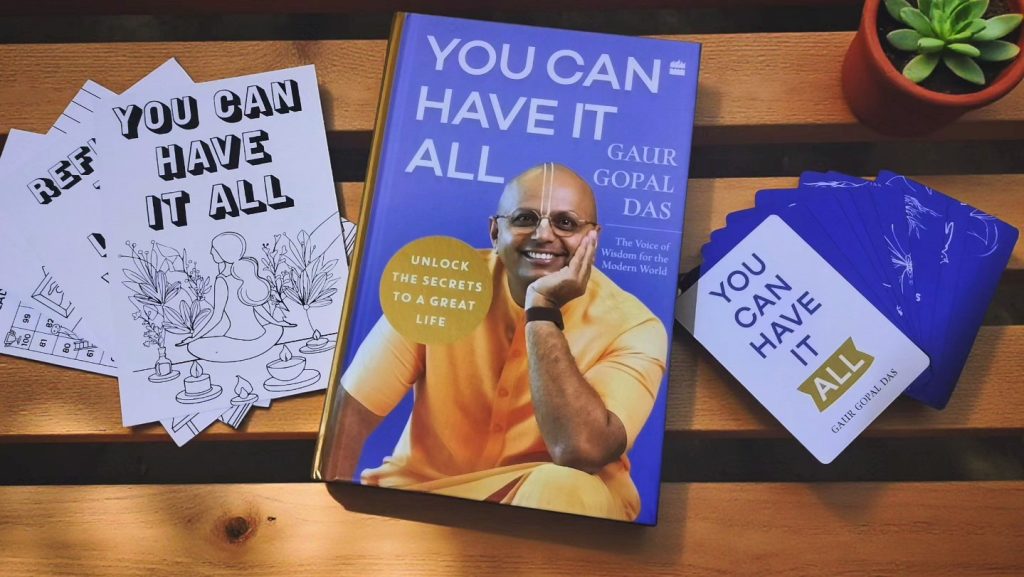
Most of us grow up believing that life is something to be earned. Happiness after success. Peace after stability. Love after we become “enough.” We chase milestones as if fulfilment were a prize waiting patiently at the end of endurance. “You Can Have It All” steps into this collective exhaustion and asks a deceptively simple, deeply unsettling question: what if the problem is not that we don’t have enough, but that we don’t know how to live with what we already carry?
This is not a book that competes for attention. It does not shout wisdom. It does not dazzle with theories. Instead, it sits beside the reader, quiet, observant, patient, and allows meaning to surface through ordinary human moments.
The choice of a three-day wedding in Jaisalmer as the narrative frame is deliberate and thematically precise. An Indian wedding is one of the rare spaces where personal history, social expectation, unresolved grief, ambition, love, and resentment all coexist openly. Celebration becomes camouflage; ritual becomes pressure.
Jaisalmer’s stillness, its desert quiet, its historical weight, creates a counterpoint. Against this vast, unmoving landscape, the characters’ inner turbulence feels sharper. The setting silently argues what the book insists throughout: external grandeur cannot compensate for internal imbalance.
What is striking about Gaur Gopal Das in this narrative is his refusal to dominate it. He does not arrive as a problem-solver. He listens more than he speaks. He pauses where others rush.This restraint is not aesthetic, it is philosophical. The book’s moral centre lies in the belief that wisdom is not always corrective. Sometimes it is containment. The monk’s presence allows people to articulate truths they have long suppressed, not because he instructs them to, but because he does not interrupt them.
Silence, in this book, is not absence. It is ethical presence. The monk’s refusal to fill emotional space with solutions critiques our discomfort with unresolved pain. The book suggests that the need to “fix” often serves the listener more than the speaker.
The extended conversational scenes involving family members and romantic partners are deliberately unresolved. People speak honestly, but timing matters. The book does not guarantee redemption through truth-telling. This honesty elevates the narrative. It acknowledges that maturity does not prevent loss, that clarity sometimes arrives after consequences have set in. Wisdom, the book argues, does not erase cost, it teaches us how to bear it without bitterness.
✍️ Strengths :
🔸The questions are precise, grounded, and genuinely reflective
🔸Concepts like control, acceptance, negotiation, and grace are thoughtfully structured
🔸They extend the book from reading into lived practice
🔸Deep emotional realism without sentimentality
🔸Strong coherence between narrative, metaphor, and design
🔸Compassionate tone without moral superiority
🔸Culturally rooted yet widely relatable
🔸Refusal to oversimplify complex human emotions
In conclusion, it is not a book about achieving balance. It is a book about learning to remain present inside imbalance, without numbing, without denial, without self-betrayal. It does not promise happiness, It offers honesty. It does not sell answers, It teaches patience. In a culture obsessed with becoming more, this book insists on something far more demanding and far more humane which is,”Learn to live truthfully with what you already are.”